Speaking Machines and Living Languages

 University of Warsaw
Modern Languages Building, University of Warsaw
ul. Dobra 55, Warsaw, Mazovia
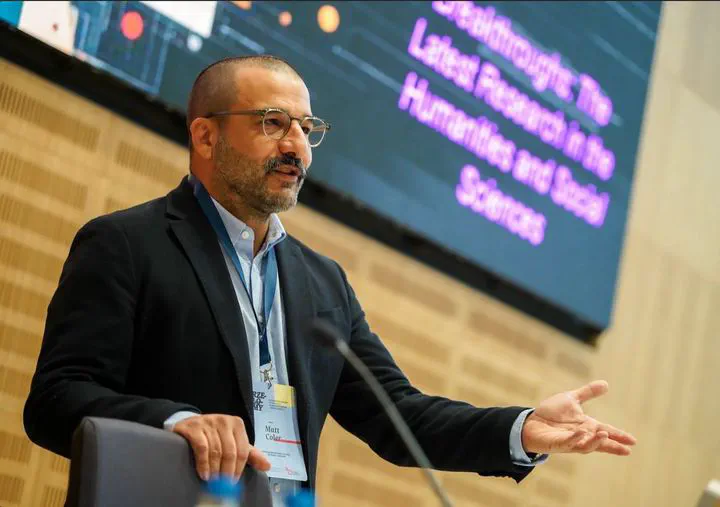
Invited keynote lecture at the University of Warsaw’s prestigious BREAKTHROUGHS conference, which showcases the latest research in humanities and social sciences.
Talk Overview
Through an interactive audio history, this presentation explores the evolution of speech synthesis technology from Von Kempelen’s 1791 mechanical speaking machine to contemporary neural architectures. The talk demonstrates how each technological era fundamentally reimagined the nature of speech itself:
- 18th-19th Century: Speech as physical resonance and mechanical reproduction
- 20th Century: Speech as encodable information and signal processing
- 21st Century: Speech as learnable patterns in neural networks
Key Themes
Technical Accessibility
Live demonstrations illustrate how small regional and under-resourced languages can achieve natural-sounding synthesis, challenging conventional assumptions about the data requirements for quality speech technology.
Critical Questions
The talk raises fundamental questions about the transformation of speech from embodied cultural practice to decontextualized acoustic reproduction:
- What is lost when voice becomes data?
- How does technological reproduction affect linguistic and cultural identity?
- What role should humanities and social sciences play in shaping speech technology?
Interdisciplinary Perspective
This presentation argues that speech technology development increasingly requires methodological contributions from social sciences and humanities—not as supplementary concerns, but as essential perspectives on what constitutes meaningful technological “breakthrough” in a field dominated by engineering approaches.
Conference Context
The BREAKTHROUGHS conference brings together leading researchers to present cutting-edge work at the intersection of humanities, social sciences, and technology. This keynote opens the second day of the conference, setting the stage for discussions about responsible research assessment and societal impact.
Venue
Location: AULA 0.410 (ground floor)
Building: Modern Languages Building
Address: ul. Dobra 55, Warsaw, Poland
Institution: University of Warsaw